
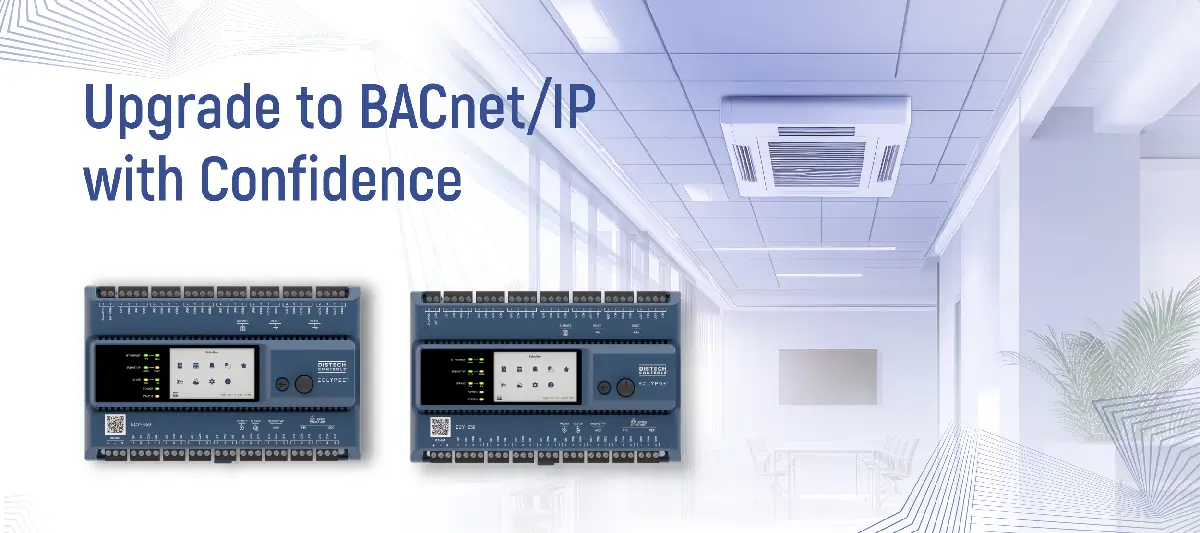
A Complete Guide to Cost-Efficient BACnet/IP Modernisation
In today’s rapidly evolving commercial and institutional buildings, automation systems must keep pace with rising demands for efficiency, sustainability, and seamless connectivity. Modernising building automation is no longer optional, it is a strategic necessity for long-term operational performance.
At Messung BACD, the authorised distributor of Distech Controls in India, we focus on delivering intelligent, open-standard solutions that enhance building efficiency while accommodating diverse infrastructure requirements. When planning a BACnet/IP upgrade, the objective is clear: achieve cost efficiency, ensure future readiness, and enable a smooth, disruption-free transition.
This step-by-step guide outlines how to execute a cost-effective BACnet/IP upgrade, covering system assessment, controller upgrades, VAV retrofits, IoT integration, and complete building management system modernisation.
Assess Your Existing Building Automation System
Every successful BACnet/IP upgrade begins with a thorough evaluation of the current system. Start by analysing the existing architecture, including controllers, sensors, VAV units, and overall network topology. Determine whether the building operates on legacy BACnet MS/TP networks, older BACnet/IP controllers, or non-BACnet HVAC systems.
A comprehensive system audit helps identify outdated hardware, isolated subsystems, unsupported protocols, and recurring maintenance issues. Document all critical assets such as AHUs, chillers, VAV boxes, motors, field sensors, and software platforms. Review wiring integrity, network performance, and historical fault logs.
This assessment establishes a clear baseline for your building management system upgrade and provides the technical foundation for a successful BACnet HVAC controller upgrade.
Define Upgrade Objectives and Budget
Once the system audit is complete, clearly define the goals of your BACnet/IP upgrade. Typical objectives include:
- Enabling interoperability between HVAC, lighting, and security systems
- Reducing long-term operational costs through open-protocol BACnet/IP controllers
- Integrating cloud-based analytics using IoT-ready BACnet/IP controllers
- Implementing an energy management system (EMS) for real-time monitoring
Clear objectives help determine the appropriate upgrade scope and budget. A cost-effective BACnet upgrade balances upfront investment with long-term energy savings and reduced maintenance costs. While open-standard platforms may involve higher initial costs, they offer superior scalability, flexibility, and vendor independence over time.
Select the Right Open-Standard BACnet/IP Platform
Choosing the correct platform is critical for long-term system viability. BACnet/IP is a globally accepted open communication protocol that enables seamless integration of HVAC, lighting, fire safety, and energy systems within a unified building automation ecosystem.
When selecting controllers and software, ensure that:
- Controllers support BACnet/IP with B-BC or B-BC/B-SC profiles
- Multi-protocol compatibility is available (BACnet/IP, BACnet MS/TP, Modbus, MQTT, REST APIs) to support phased upgrades
- Core features such as trend logging, alarms, COV objects, and IT/OT integration are fully supported
Messung BACD delivers scalable, open-standard building automation solutions that simplify BMS upgrades and ensure long-term performance and system interoperability.
Plan a Phased Migration Strategy
A structured migration plan reduces risk and prevents operational disruptions. Divide the upgrade into manageable phases:
- Back up existing systems to ensure continuous building operation
- Implement a pilot upgrade on a single zone or AHU to validate performance
- Gradually replace field devices, including VAV controllers, in stages
- Use VLANs and managed switches to maintain stable BACnet/IP communication
- Train facility teams and update system documentation
A phased approach allows legacy and upgraded systems to operate in parallel, ensuring uninterrupted building functionality during the transition.
Execute Hardware and Software Upgrades
During implementation, focus on both hardware modernisation and software configuration:
- Replace legacy devices with advanced BACnet/IP controllers or BACnet VAV controller retrofit modules
- Deploy IoT-enabled controllers for enhanced data acquisition and analytics
- Integrate all devices within the broader building automation system modernisation framework
- Configure BACnet objects, trend logs, alarms, and access permissions
- Implement EMS or middleware platforms to centralise HVAC, lighting, and energy monitoring
All installations should adhere to industry best practices in wiring, networking, and commissioning to ensure long-term system stability.
Testing and Commissioning
Rigorous testing is essential to validate system performance and reliability. Key commissioning steps include:
- BACnet device discovery to confirm object communication
- Functional testing of AHUs, VAV boxes, and alarm sequences
- EMS validation to ensure accurate energy reporting and trend analysis
- Network testing to evaluate latency, redundancy, and fault recovery
Proper commissioning ensures that the BACnet/IP upgrade delivers measurable improvements in comfort, efficiency, and reliability.
Optimise Performance and Monitor Cost Savings
The true value of a BACnet/IP upgrade emerges through continuous optimisation. Post-implementation monitoring enables:
- Dynamic HVAC and lighting control based on occupancy and environmental conditions
- Predictive maintenance using fault trend analysis
- Energy usage insights through EMS dashboards
- Data-driven decision-making for operational efficiency
Ongoing system audits and software updates help maintain peak performance, extend equipment life, and maximise ROI from your cost-effective BACnet upgrade.
Real-World Upgrade Example
A 15-storey commercial building operating on legacy BACnet MS/TP controllers faced frequent manual interventions and lacked energy analytics. By upgrading to BACnet/IP controllers and retrofitting outdated VAV units with BACnet VAV controller modules, the facility achieved full EMS integration.
Within one year, energy consumption was reduced by 18%, maintenance costs dropped by 22%, and tenant comfort improved significantly. This building management system modernisation paid for itself within three years.
Conclusion
A BACnet/IP upgrade is both a technical enhancement and a long-term financial investment. With the right approach, from system assessment and phased migration to continuous optimisation, you can modernise your building automation infrastructure without exceeding budget constraints.
At Messung BACD, we support building owners and facility managers at every stage of the upgrade journey. Our expertise ensures solutions that combine energy efficiency, occupant comfort, and operational sustainability.
A well-planned Messung BACD BACnet/IP upgrade keeps your building intelligent, efficient, and future-ready. The future of building management is not just automated, it is integrated, data-driven, and designed for long-term performance.