
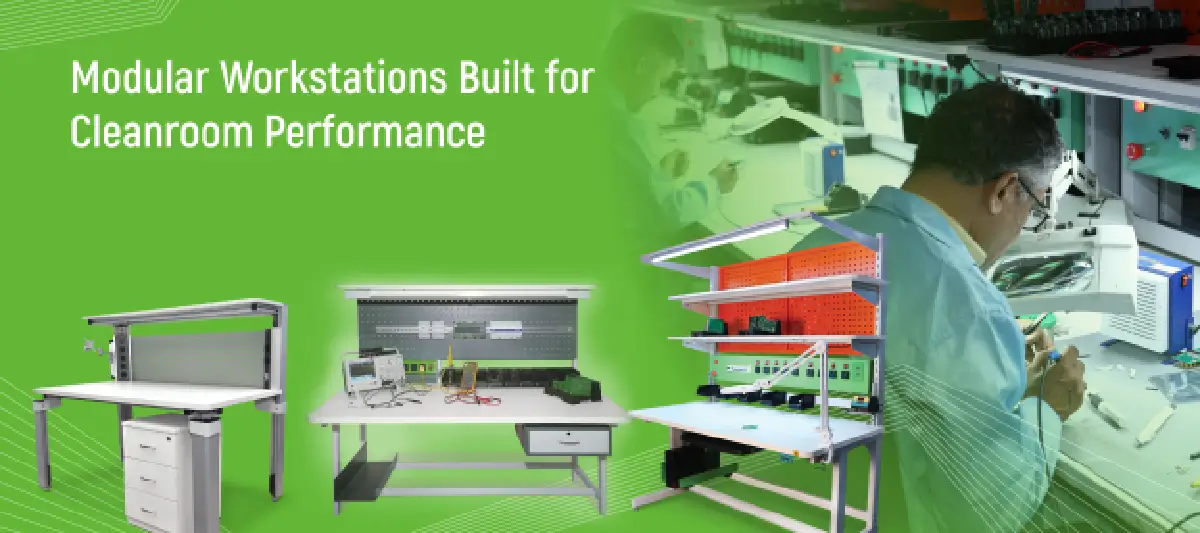
Top 5 Benefits of Modular Workstations in Clean Rooms
Clean rooms require far more than controlled airflow and spotless surfaces. They demand highly functional, purpose-built environments where every component supports precision, hygiene, and operational efficiency. Among the most critical elements in this setup are cleanroom workstations.
Modular cleanroom workstations have become the preferred choice across industries such as pharmaceuticals, electronics, biotechnology, and precision engineering. These systems go beyond conventional tables. They play a vital role in workflow optimisation, contamination control, and regulatory compliance.
Below are the top five benefits of modular workstation systems in cleanroom environments.
1. Superior Cleanliness and Contamination Control
Contamination prevention is central to cleanroom operations. Modular workstations designed for cleanroom use are typically constructed from stainless steel or powder-coated metal, featuring smooth, non-porous surfaces that are easy to clean and resistant to microbial growth.
Minimal joints, seamless edges, and the absence of dust-trapping corners help maintain strict hygiene standards. These design characteristics reduce particle accumulation and support consistent cleaning protocols.
Cleanroom workplace tables can also be configured with accessories that align with ISO class requirements. This is particularly critical in pharmaceutical manufacturing and microelectronics, where even microscopic contaminants can impact product quality.
2. Space Optimisation and Operational Flexibility
Cleanrooms often operate within limited and carefully controlled spaces. Fixed furniture can restrict layout changes and limit adaptability as processes evolve. Modular lab workstation systems address this challenge by offering flexibility in design and configuration.
Customisable dimensions and modular components allow workstations to be reconfigured as workflows change. Equipment integration, table relocation, or the addition of drawers, racks, or shelving can be done without dismantling the entire setup.
Messung Workplace Technology offers modular lab workstation solutions that can be scaled, relocated, or reconfigured to suit evolving cleanroom requirements, operator preferences, and process protocols.
3. Improved Ergonomics and Higher Productivity
Cleanroom personnel often perform repetitive, detail-oriented tasks for extended periods. Poor ergonomics can lead to fatigue, discomfort, and errors, directly affecting productivity and precision.
An ergonomic lab workstation is designed for user movement and posture. Adjustable height options, strategically placed shelves, and under-table storage ensure tools and components remain within easy reach, reducing unnecessary strain.
When operators work comfortably, they maintain focus, reduce errors, and achieve higher output. This is why Messung’s industrial workstation designs prioritise ergonomic engineering alongside structural strength.
4. Long-Term Durability and Cost Efficiency
Cleanroom furniture must withstand frequent cleaning with disinfectants, alcohol-based solutions, and, in some environments, corrosive chemicals. Modular workstations manufactured from stainless steel or powder-coated aluminium are built to resist corrosion, wear, and surface degradation.
This durability translates into long-term cost savings. Instead of frequent replacements or downtime due to damaged furniture, organisations benefit from a workstation system designed for extended service life.
Modularity further enhances cost efficiency. Accessories such as drawers, monitor arms, power channels, or storage units can be added as needed, ensuring investment is aligned with operational requirements rather than unnecessary upfront costs.
5. Compliance with Industry Standards and Regulations
Cleanrooms in life sciences, electronics, and precision manufacturing must adhere to strict regulatory frameworks, including ISO classifications, GMP guidelines, and ESD safety standards.
Modular cleanroom workstations are engineered to meet these requirements. Whether the application calls for ESD-protected industrial workstations for electronics testing or stainless-steel workbenches for pharmaceutical preparation areas, configurations are designed to meet regulatory expectations.
With a consultative approach, Messung Workplace Technology also supports organisations in aligning workstation design with applicable standards, ensuring compliance without compromising functionality.
Why Choose Messung Workplace Technology?
With over four decades of precision engineering expertise, Messung Workplace Technology specialises in designing modular lab furniture and industrial workstations for demanding environments.
Proudly Made in India, these solutions serve global industries across cleanrooms, R&D laboratories, and electronics assembly facilities. Each workstation integrates hygiene-focused design, ergonomic efficiency, structural durability, and regulatory compliance.
Conclusion
Modular workstations play a crucial role in enhancing cleanroom efficiency, safety, and adaptability. By supporting contamination control, ergonomic performance, long-term durability, and regulatory compliance, they become a strategic investment rather than just functional furniture.
If you are planning to upgrade or optimise your cleanroom environment, exploring modular workstation solutions can deliver the flexibility and performance required for modern operations. Discover modular workstation systems designed to integrate seamlessly with your cleanroom’s technical and operational needs.